Bridging the IT/OT divide: Practical steps toward a connected future
Julkaistu 17. marraskuuta 2025: Industry 4.0
AI, data, digital twins, and IT/OT convergence dominate today’s industrial agenda. Yet for many manufacturers, one challenge remains unresolved: bridging the gap between the enterprise systems that plan the work and the operational technologies that make it happen.
ERP systems and MES platforms still sit on one side of the wall, while PLCs, sensors, and robots operate on the other. For decades, Information Technology (IT) and Operational Technology (OT) have advanced in parallel rather than together. IT delivers data, analytics, and corporate visibility; OT ensures uptime, safety, and production reliability. Both are indispensable, but too often, insights generated at the enterprise level fail to reach the shop floor, while valuable operational data remains confined within engineering teams.
As a result, the full promise of digital transformation remains out of reach. This divide is no longer just technical but strategic. Manufacturers face relentless pressure to adapt faster to shifting demand, shorter innovation cycles, and growing sustainability expectations.
These goals cannot be achieved if digital and physical systems continue to work in isolation. Some automation suppliers have begun developing IT and OT solutions under one roof, but true competitiveness now depends on collaboration and co-creation that brings together the best expertise from across industries.
So how can manufacturers move from concept to execution?
Here are four practical ways to accelerate IT/OT convergence, drawn from our experiences at OMRON and collaborations across industries.
1. Treat digital twins as continuous improvement tools, not just design models
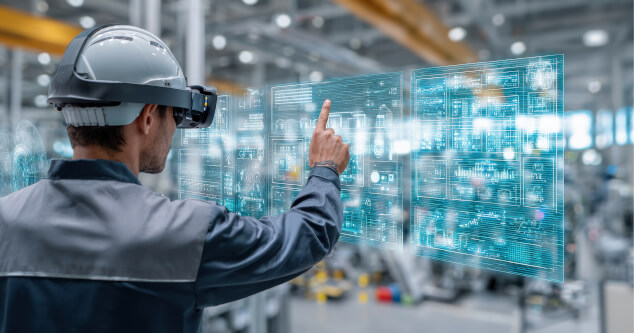
Digital twins, virtual representations of machines or processes, allow companies to model, test, and optimize before implementation. Yet the real measure of value lies in how effectively those models translate into real-world performance.
Tip: Don’t stop at simulation. Make your digital twins a live feedback loop.
Through our collaboration with Dassault Systèmes, we have seen how connecting simulation data with real automation hardware such as controllers, sensors, and robots enables a continuous exchange between the virtual and the physical. Operational data flows back into the models, creating an ongoing cycle of learning and optimization.
Practical takeaways:
- Use digital twins not just for testing but for learning.
- Continuously feed operational data into your models to improve accuracy.
- Involve both IT and OT teams early to ensure simulations reflect real conditions.
This approach transforms the digital twin from a visualization tool into a productivity engine that shortens ramp-up times, reduces engineering risk, and enables faster innovation cycles.
2. Build a two-way data flow between enterprise and shop floor
Even the smartest enterprise strategies fall short if frontline teams cannot act on them. Likewise, valuable shop-floor data often never reaches decision-makers. In many organizations, IT strategies are driven by corporate priorities, while OT remains focused on production performance, and the two rarely meet.
Tip: Eliminate data silos. Insights should move in both directions.
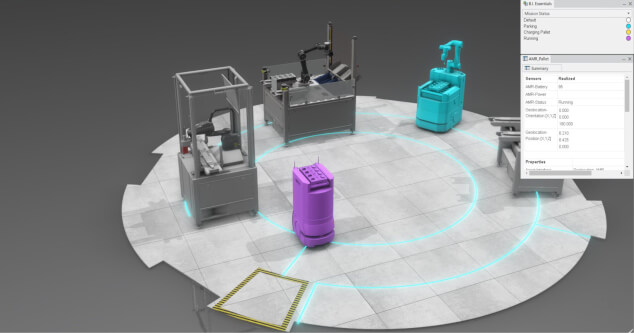
Our collaboration with Cognizant, a global system integrator, is designed to close that gap. By combining OMRON’s automation expertise with Cognizant’s strength in cloud, AI, IoT, and analytics, we help manufacturers create a continuous feedback loop between the enterprise and the shop floor.
For example, when a sensor detects an anomaly, that data can be instantly contextualized and correlated with business metrics. Management gains visibility into performance issues, while engineers receive predictive insights to prevent downtime. Decision cycles that once took weeks can now happen in minutes.
Practical takeaways:
- Audit your data flow and identify where information stops moving.
- Define ownership for data integrity between systems.
- Start small by connecting one process end-to-end before scaling across sites.
Companies that achieve this level of integration can anticipate disruptions, make faster adjustments, and protect both output and margins.
3. Move toward real-time digital twins
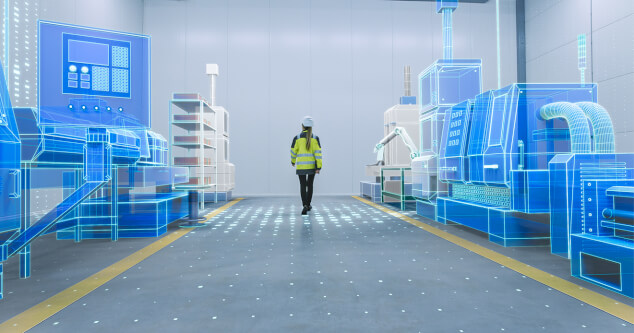
The next evolution of IT/OT convergence is real-time synchronization between virtual and physical environments. This allows engineers to test, validate, and improve processes virtually without interrupting production.
Tip: Use live data to make smarter, faster adjustments without stopping production.
In a pilot collaboration with NVIDIA, OMRON’s Sysmac Studio automation software and NX series controllers were integrated with the NVIDIA Omniverse platform to create digital twins that mirror live operations with extreme fidelity. These models are continuously updated with operational data, enabling real-time visualization and testing.
Practical takeaways:
- Start capturing live data streams to power real-time models.
- Use these models for virtual troubleshooting before applying changes on the line.
- Focus on high-impact areas, where downtime is costly and precision is critical.
With real-time twins, manufacturers can test process changes safely, validate outcomes virtually, and deploy updates confidently while keeping production running. This capability can significantly reduce costs, shorten development cycles, and improve predictability.
4. Collaborate beyond your walls
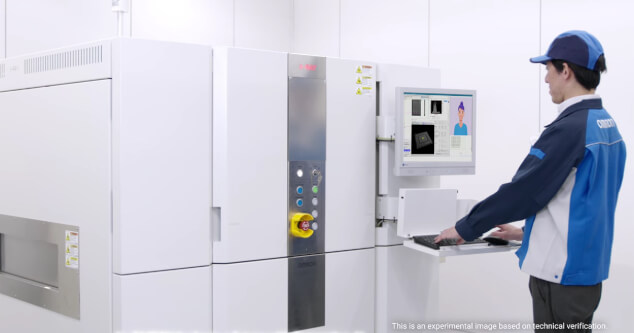
True IT/OT convergence requires expertise across automation, cloud, AI, and systems integration. No single company can cover all of these domains. The most successful manufacturers are those that co-create, leveraging complementary strengths to accelerate transformation.
Contact us for more information
Tip: No company can converge IT and OT alone. Build an ecosystem.
At OMRON, we have learned that collaboration with organizations such as Dassault Systèmes, Cognizant, and NVIDIA can multiply innovation capacity. Each company contributes distinct value, from simulation to enterprise integration to real-time computing, and together they demonstrate how convergence becomes reality.
Practical takeaways:
- Seek partners who complement, not duplicate, your capabilities.
- Share data and insights securely to enable joint innovation.
- Treat convergence as an ongoing collaboration, not a one-time project.
The question is no longer whether IT and OT will converge, but how quickly companies can make it happen with a clear purpose in mind. Start small, think long-term, and collaborate openly. The organizations that do will improve efficiency, and gain the resilience and adaptability to thrive.
Did you know that OMRON has Automation Centers across the globe? These are dedicated spaces for co-creation and collaboration, also for IT/OT integration.
Did you know that OMRON has Automation Centers across the globe? These are dedicated spaces for co-creation and collaboration, also for IT/OT integration.