Even if the defect is invisible, the failure certainly isn't
Julkaistu 20. heinäkuuta 2026: Sustainable Manufacturing
Even if the defect is invisible, the failure certainly isn't
3D X-ray inspection for EV inverters and power modules: how OMRON's VT-X850 catches invisible defects
The global automotive market has undergone an unprecedented transformation, driven by the acceleration of electrification in recent years. Carmakers have invested heavily in electric and hybrid vehicles. This transition has brought with it a new industrial challenge: ensuring optimal performance of the electronic components that govern energy conversion and management in these vehicles.
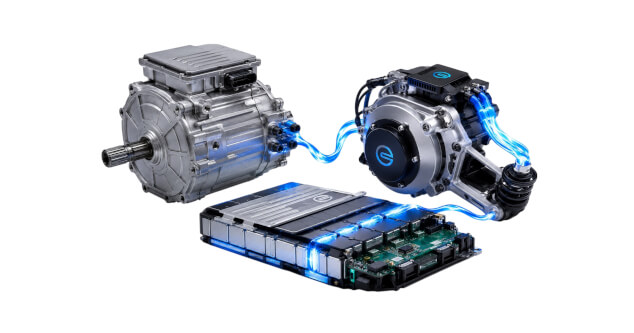
At the heart of this technological revolution are power systems: high-voltage batteries, IGBT modules, MOSFETs, DC/DC converters, and above all inverters, the real nerve centres of the electric powertrain*. These components are crucial for energy management, current conversion, and the protection of other vehicle components. Their reliability is essential in ensuring the safety, performance and longevity of electric vehicles.
However, these power systems pose a particular challenge to the automotive industry: their increasingly complex, multi-layered and dense design, combined with high temperatures and currents, makes it difficult to identify defects invisible to the naked eye.
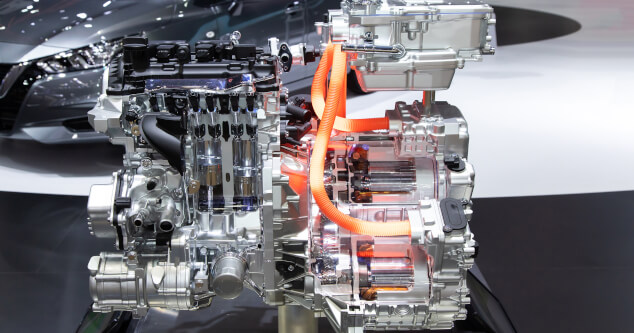
This is where X-ray inspection systems come into play, offering a non-destructive testing (NDT) solution to inspect the inside of components, identify hidden defects, and ensure production quality.
The specific challenges of inverters in automotive electrification
Inverters in electric and hybrid vehicles play a fundamental role: they convert direct current (DC) from batteries into alternating current (AC) to power the electric motor.
These components must meet very stringent performance requirements:
- Thermal resistance: Inverters must withstand repeated thermal cycles without deterioration.
- High current density: Large currents flow through the circuits, requiring high-precision design.
- Durability: The lifespan of these components must be maximized, without compromising on performance.
- Safety: A fault in an inverter can lead to motor failure or, worse, safety hazards for vehicle occupants.
One of the main challenges faced by manufacturers is the detection of internal defects in complex components, such as power module solders and substrate delaminations, which are invisible to conventional optical inspections. To ensure optimal performance and avoid premature failures, careful inspection at every stage of manufacturing is a must.
A strategic lever for European competitiveness
In Europe, an increasingly competitive market in the automotive sector, mastery of the inspection of power devices is becoming a crucial differentiating factor. Demand for electric vehicles is growing strongly, but margins remain tight and quality requirements are higher than ever.
Inspection solutions can offer European manufacturers a major competitive advantage by enabling defect detection at a very early stage of the manufacturing process. This accuracy helps reduce customer returns, optimize product performance, and meet the stringent requirements of automaker certifications and audits.
Inspection solutions adapted to the challenges of automotive electrification
OMRON is a major global player in industrial automation and quality control technologies, with more than 90 years of experience in control and automation systems. The company develops machine vision, automated metrology and X-ray inspection solutions for high-quality sectors such as electronics, automotive, semiconductors and aerospace.
Inverters, IGBT modules, MOSFETs, and other power components are distinguished by their internal complexity. They incorporate multiple layers of materials, DCB (Direct Copper Bonding) substrates, sensitive semiconductors, and massive brazing joints. Defects that can occur in these components are often not visible to the naked eye and can lead to serious failures if not detected beforehand.
To address these challenges, OMRON has developed the VT-X850, building on its VT-X750 platform, which was initially designed for high-density PCBs and surface-mounted components.
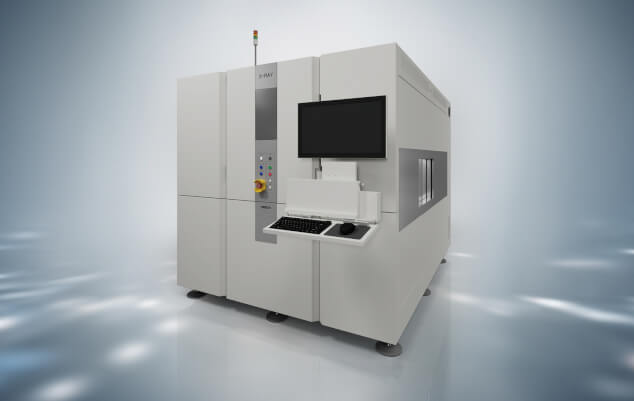
The OMRON VT-X850 is a high-resolution 3D X-ray inspection system. Using computed tomography (CT), it reconstructs detailed three-dimensional images of a component's internal structure, enabling the detection of defects that are invisible to conventional optical inspection methods. The VT-X850 extends the capabilities of the VT-X750 to meet the specific demands of power device inspection, providing high-resolution 3D X-ray inspection that allows every layer of components to be observed without damaging them.
The VT-X850 offers an in-depth analysis of components, detecting:
- Internal voids under IGBT or MOSFET chips
- Weld defects (cold welds, air bubbles, contamination)
- Substrate detachments or invisible micro-cracks
- Alignment problems in multilayer structures
Non-destructive X-ray inspections are essential to ensure that these components can withstand the high thermal and electrical stresses they are subjected to during their use in electric vehicles. The VT-X850 ensures advanced defect detection in the early stages of production.
A real-world case: Delivering results for a global EV manufacturer
One of the world's largest automotive electrification players, specializing in the design and manufacture of electric vehicle inverters, integrated OMRON's VT-X850 into their production lines to inspect the most complex power modules.
The challenges faced by these customers were numerous:
- Insufficient detection rates for some complex internal faults in power modules.
- Process variability on the most sophisticated inverter models, which could not be satisfactorily inspected with existing technologies.
- A need to reduce DPPM (defects per million units) while maintaining high production rates.
After a rigorous evaluation phase, the manufacturer chose to integrate the VT-X850 into its most critical production lines, dedicated to the high-tech components used in next-generation electric vehicles.
The results were remarkable:
- Significantly improved the detection rate of internal defects, including weld defects and under-chip peels.
- Reduced quality returns through early detection of invisible defects, preventing premature module failures.
- Optimization of the production process through better traceability and more precise quality control, which has made it possible to stabilize the production parameters.
- Increased customer confidence as the performance of these modules has exceeded expectations for durability and safety.
Conclusion
The electrification of the automotive industry and the increasing demands on power electronics, including inverters, are driving increasingly sophisticated inspection solutions. OMRON's VT X850 is positioned as an essential tool to ensure the quality and reliability of power
For more information, visit OMRON Inspection Systems
*The electric powertrain encompasses all components responsible for generating and delivering propulsion in an electric vehicle. IGBT modules (Insulated Gate Bipolar Transistors) are semiconductor switches that control high-power electrical currents with precision. MOSFETs (Metal-Oxide-Semiconductor Field-Effect Transistors) perform a similar switching function, typically at higher frequencies and lower power ranges. DC/DC converters regulate voltage levels between different parts of the electrical system, for example, stepping down high-voltage battery power to supply the vehicle's 12V systems. Inverters convert the direct current (DC) stored in the battery into the alternating current (AC) required to drive the electric motor, and are the central component governing the vehicle's performance and energy efficiency.