Automation blog
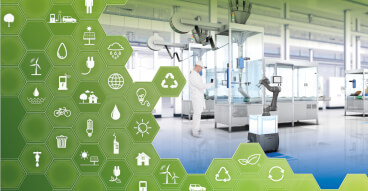
Automation adapts to sustainable packaging
16. elokuuta 2022 Have you ever ordered a small item online, and then felt incensed when it arrived in an oversized box packed out with bubble wrap, air-filled cushions or paper inserts?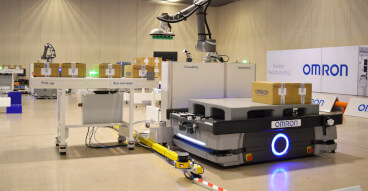
Flexible Manufacturing Roadshow: Taking the factory of the future across Europe
16. kesäkuuta 2022 What if you could see, feel and touch the factory of the future? What does it take to realize flexible, efficient, and sustainable production? This is the idea behind OMRON’s unique Flexible Manufacturing Roadshow travelling across Europe this year. The roadshow features exclusive demonstrations of human-machine collaborative solutions not usually seen outside of a factory setting due to their size and scale.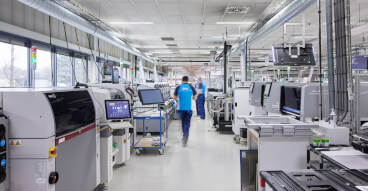
Building the Factory of the Future together
16. kesäkuuta 2022 As one of the largest business units at OMRON, we aim to further develop the Den Bosch plant to serve the needs in the EMEA region.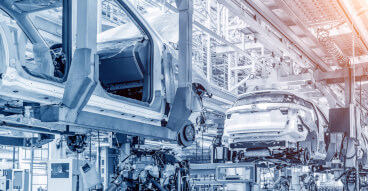
Traceability in Automotive: What decision-makers and experts should look out for now
23. toukokuuta 2022 From e-mobility to autonomous driving, from skills shortages to digitalization: The automotive industry is undergoing a profound change, marked, for example, by a shift to globalized platforms and standardized vehicle architectures. On the one hand, production is becoming increasingly efficient, but on the other, even a single faulty part can have more far-reaching effects than ever before. Faced with costly recalls, automotive manufacturers are confronted with increasingly complex requirements and stricter specifications. Is the effort of traceability worth it if it means labeling up to 20,000 parts per vehicle? Yes, it is, but powerful reading and verification technologies along with powerful software is needed to make sense of all the data.There are several reasons why manufacturers need to keep accurate records of the parts and components that make up a new car. From a quality perspective, for example, barcode tracking helps to ensure that the right parts are put together. Even more important, however, is the ability to trace each car part back to its original supplier. In the event of a recall or the discovery of a faulty part, manufacturers have to be able to quickly and comprehensively find out where each part came from. This is complemented by information such as batch number, date of manufacture and other important information to identify which vehicles are affected by a defective part. Recommendations and standards from AIAG, VDA, ANSI and ISO specify the details. As the automotive industry globalizes, worldwide production of light vehicles is expected to reach around 96 million units by 2023. This means that even a single faulty part can have an enormous impact, and therefore must be prevented at all costs.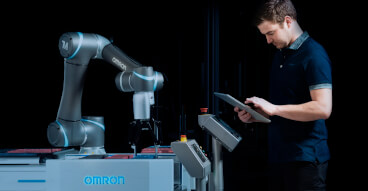
Lights out? Still unlikely with Industry 4.0
21. huhtikuuta 2022 For many manufacturers, the prospect of a fully automated, human-free factory feels light years away. When, they ask, is the 4th Industrial revolution coming to us and what can we expect? In this blog, we look at the realities of (fully-/semi-)automated manufacturing, what robots can and can’t do, and why the human touch is still (mostly) irreplaceable.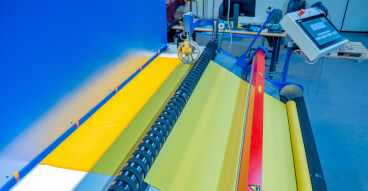
Vadain automates the inspection of curtain fabrics with machine vision
08. huhtikuuta 2022 Vadain, the market leader in custom curtains in the Netherlands, needed a solution to detect errors as early as possible in kilometers of curtain fabrics. Together with software developers from Sycade, OMRON machine vision technology, and machine builder Eisenkolb, they developed an automated solution to detect and analyze errors in curtain fabrics, making the time-consuming manual inspection process a thing of the past.
Traditional factories have data needs too
18. maaliskuuta 2022 The right tools and tech can enable advanced predictive maintenance, bottleneck prevention and optimization. Find out how digitalization is bridging the gap between legacy systems and Industry 4.0.
Fuel for the future: What to look out for in fuel cell production
10. maaliskuuta 2022 When people talk about sustainable mobility, the first thing that comes to mind is battery-powered e-cars. Fuel cells or direct hydrogen burners are complementary technologies that often fade into the background, yet have a lot to offer when it comes to CO₂ reduction and market options.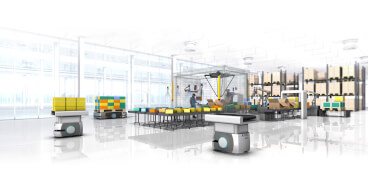
Mastering packaging and intralogistics challenges in eCommerce
24. helmikuuta 2022 Robot-assisted packaging enables fast and cost-efficient scalability upward and downward to handle swings in demands from the supply chain.
Green packaging industry: How to achieve sustainable manufacturing
09. helmikuuta 2022 Sustainability in the packaging industry is one of the key aspects in fighting the plastic waste issue and ultimately climate change. The challenges that this presents, require flexible and powerful automation technology.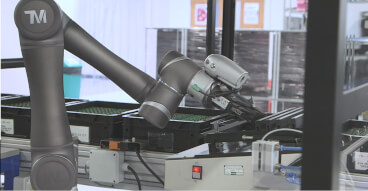
Hanover Displays automates PCBA testing with cobots
31. tammikuuta 2022 UK-based Hanover Displays Limited needed a new system for testing printed circuit board assemblies (PCBAs) and selected OMRON TM cobots for the job, supplied and installed by Absolute Robotics, part of the Absolute Automation Group.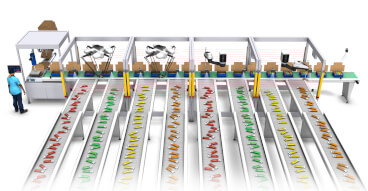
Five challenges in High-Mix, Low-Volume (HMLV) packaging and palletizing processes
21. joulukuuta 2021 The new product has just left the factory, in a shelf-ready package in the specified mixed ratio to meet customer needs. The packaging has actually been handled by another company: a co-packer. Co-packing can be found in all Fast-Moving Consumer Goods (FMCG) markets, but especially in the higher-priced product segments such as personal care or confectionery, to name a few examples. It is a fast-growing activity to satisfy the consumer demand for more variety.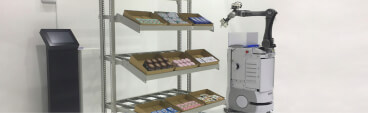
Autonomous bin picking with a collaborative mobile robot
16. lokakuuta 2019 Our TM collaborative robot provides a unique solution to easily automate applications such as picking and packing that, traditionally performed by humans, have been challenging to automate. As part of the TM series launch, we also released a mobile-compatible model, which seamlessly integrates into Omron’s LD series autonomous mobile robot. Combined with a 3D vision camera mounted directly onto the collaborative robot, this enables for example e-commerce companies to automate more complex tasks. This includes pick and place of various items onto a tray or container, as well as connecting production processes with the autonomous mobile robots for flexible manufacturing and materials handling.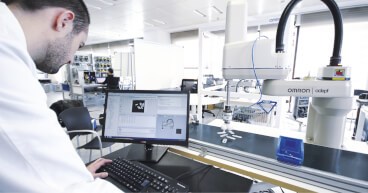
The power of collaboration between machines, people and teams
01. lokakuuta 2019 With today’s rapid advances in technology, the manufacturing sector needs to be increasingly agile, ready to adapt to changing demands. Production lines must be more flexible, so that they can cope with shorter production runs, more varied products and tight deadlines. So how can manufacturers address these challenges? The solution lies in more advanced, interconnected and intelligent systems that can be programmed to handle a range of tasks.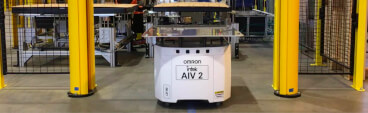
Mobile robots speed production at new ‘smart factory’
26. syyskuuta 2019 Showcasing flexible production in real life, a new ‘Smart Factory’ in Norway uses a variety of robots in a system developed and implemented by system integrator Intek Engineering.